

Merrell Moab vs. Altra Lone Peak 9 Plus: Why I Finally Switched to Trail Runners
For years, I proudly carried the weight of my convictions, literally. I was a hiking boot loyalist, the kind of hiker whose trail uniform was defined by bulky, ankle-high leather, paired with the requisite hiking leggings. Brown boots and tall hiking socks were my go-to style for every trail, no matter how flat or forgiving. But now? Lacing up my new shoes, a single, humbling question screams in my head: How the heck did I hike so long in those? To be fair, I’m still a big fan of my Merrell Moab 2 Ventilator’s (you can read my review of them, here) and in the right rugged terrain and distance, I would still lace those beasts up. But for the dirt and gravel trails which make up 90% of my hiking adventures, my new utterly weightless love affair has been the Altra Lone Peak.
Okay, let’s address the elephant in the hiking bag. If you’re a fixture in the hiking community, you’ve probably developed a sixth sense for spotting a classic trail-shoe soapbox moment, and yes, I'm mounting it right now. We all roll our eyes at the 100th person to declare their footwear a spiritual experience, but if you’re still a fellow boot loyalist eyeing those sleek Altra profiles with suspicion, or just looking to give hiking a fair shot, I’m talking to you. This isn't just another product review; it's an intervention, because this wasn’t just a simple gear swap; it was a genuine "where have you been all my life?" moment that has fundamentally changed my time on the trail.
I’d like to take this moment to giving my husband credit where it’s due, as he was the one to research alternatives to hiking boots and shared all the information with me about trail runners and Altra, which ultimately led me to make the switch. My feet and legs are eternally grateful.
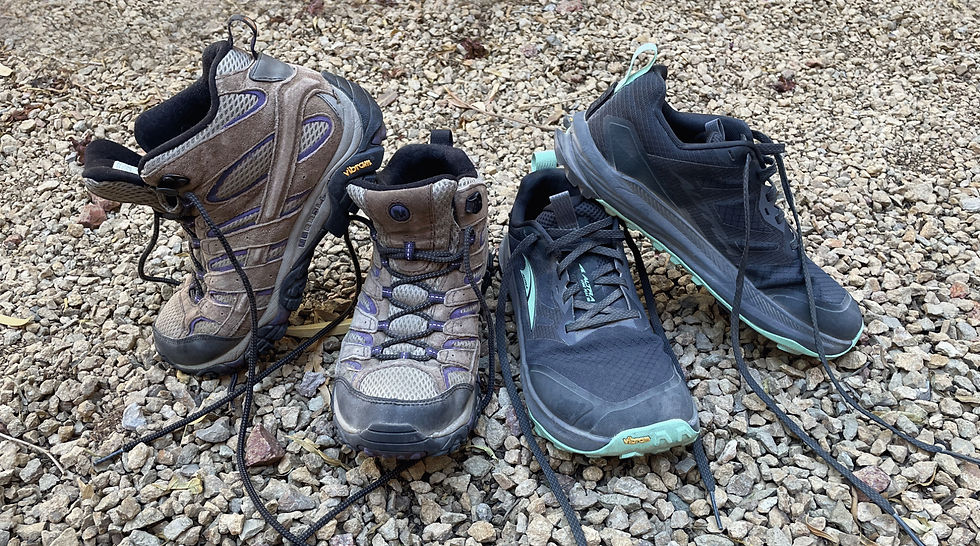
Boots vs. Trail Runners : Merrell Moab vs Altra Lone Peak for Hiking
I want to say this right now, I honestly loved the high ankle support of my Merrell’s. They provided a high arch pressure and an almost massaging effect on my Achilles that felt really comfortable. However, after just a few miles of hiking up hills or picking my feet up over rocky, technical trails, my leg muscles would feel the weight of the boots and the fatigue would set in by mile five. On flatter, more maintained trails, the fact is, they simply felt stiff and unnecessary.
This isn't all hate for my Merrell’s, though. I'll always credit them as a sturdy, reliable boot great for rugged terrain. When it came to desert hiking, they definitely provided that extra peace of mind and added protection against lone cactus spikes, and the tarantulas and scorpions that my horror-loving mind is still convinced will run onto the trail someday to attack me. But ultimately, for the 90% of my hiking on standard dirt and gravel trails, they simply felt like overkill.
Despite committing to the switch, I was incredibly skeptical of moving away from boots at first. The emotional attachment I had with my boots actually made me feel like I was a traitor to my hiking apparel. Stepping out to the trail for that first test hike, I was convinced I would retreat to my boots at the first opportunity. I worried I’d lose traction on gravel hills and that having no ankle support would be my demise.
Instead, the immediate difference was shocking. The first two miles of my trial were basically me continuously repeating things like, "Oh my gosh, they’re so light!" and "I can’t believe how easy it is to hike this hill." The lightness meant I was instantly making greater strides and holding a faster pace, and I was actually not misstepping or tripping at all. The lack of that high, stiff ankle support allowed my ankles to move naturally on technical inclines and when I would misstep (due to an invisible trail monster, of course), I was able to correct myself easier and safer since my ankle had a full range of motion instead of being locked into a rigid boot.
Weight:
This was probably the most noticeable difference right off the bat is how light the Altra’s are no heavy ankle weights means no unnecessarily expended energy.
Heel Drop:
This is actually something I have been focusing on more in the past year on and off the trails. In fact, switching from traditional sneakers for daily wear to Xero Shoes has been a game changer for foot fatigue and comfort, so I wanted to see if the same held true to hiking and the difference has been very noticeable.
Toe Box:

Also something I have been focusing on more in my daily shoe choices has been switching to footwear that resembles more of a barefoot approach, allowing my toes to have the room to spread out and thus giving me more balance and stability, which is incredibly appreciated when hiking.
Cushion:
In terms of comfort, the biggest difference isn't the initial feel, but the longevity of the cushion. My old boots always reached a point where the support bottomed out, turning my Merrells into uncomfortable options after a few hours of hiking and boots that demanded Superfeet inserts just to stay comfortable. The Altra's cushion, however, stays consistent. I get to enjoy the built-in comfort of these trail runners right up until the day I decide it's time for a fresh pair, with no extra pieces or expenses needed.
Traction:

My Merrell’s were trusted workhorse never led me to loose grip. The Altra, with its smaller lugs, initially made me nervous, but the MaxTrac/Megagrip combination has been incredible. However I can actually feel the grip on slick, rocky faces in the Vibram Megagrip on the 9 Plus mores than I could in the Merrell’s in part because of the lower drop and feeling of more connection with the ground.
Water:
While I don't often encounter full-blown river crossings, I've had my share of long hikes in the rain, heavy mud, and stream runoffs. Neither shoe has truly left me with soaked, soggy feet, but they handle water differently. The Merrell's heavier build and materials definitely provide a temperature benefit in the cold and on snowy hikes, and they keep my feet much warmer. However, the downside is that once the Merrell Moab's would get wet or snow would get inside, they almost refused to dry. The Altra's, even without being waterproof, have allowed my feet to breathe and dry out much quicker, which is definitely a benefit when it comes to preventing blisters and discomfort on a wet day.
A Quick Confession: For complete transparency, my initial, switch from the Merrell Boots happened in the Altra Lone Peak 8s. I loved them. Since then, I’ve upgraded to the Lone Peak 9 Plus, which honestly feels exactly the same, with one exception: the 9 Plus has a sleeker back flap (less dirt kicked up on the downhills) and the truly incredible Vibram Megagrip outsole. That outsole has been a noticeable upgrade when hiking on slick, rocky faces. So, while the spirit of this review covers the Altra line in general, the stats and my current obsession are with the Lone Peak 9 Plus. Consider this a testament that the core Altra magic remains, even as the details get incrementally better.
Overall Durability:

When it comes to durability and lifespan, I will put any shoe to the test. It’s a running joke (and commentary) between my husband and me: I somehow run through soles like I run through Liquid Death (IYKYK). I joke that I walk with the confidence of an elephant, and the wear patterns prove it.
Herein lies the necessary trade-off for the lighter weight shoe. I could easily get an extra few hundred miles out of my Merrell’s, but it was always a toss-up whether the cushion or the sole would go first. The Altra’s are the opposite: they keep their cushion longer with no noticeable decrease in comfort, but they do wear out quicker. Since making the switch in Spring 2024, I'm now on my second pair (purchased in summer 2025), after noticing a bit of wear in the sole of the first. However, I accept the increased frequency of replacement. The sheer comfort and reduced fatigue on my body are absolutely worth the investment over time. I'd rather have happy feet for 350 miles than fatigued feet and legs for 600. I’m planning on tracking the exact mileage I get in this current pair and will update the blog when I find out.
All in all, I'll wear through a sole regardless of the shoe, but the consistent cushion is the biggest difference in long-term comfort.
Making the jump from a rugged, heavy boot to a flexible, lightweight trail runner felt counter-intuitive, but the immediate results of easier pace, lack of fatigue, and the sheer comfort spoke for themselves. If you’re still debating making the switch, I promise, your feet and legs will appreciate the upgrade.
Let me know if you found this review and comparison between the Merrell Moab vs Altra Lone Peak useful. Until then, here’s to going light and loving even more trail time!

Comments